
AI & Automation
Build useful AI workflows with evidence, reproducible examples and human review.
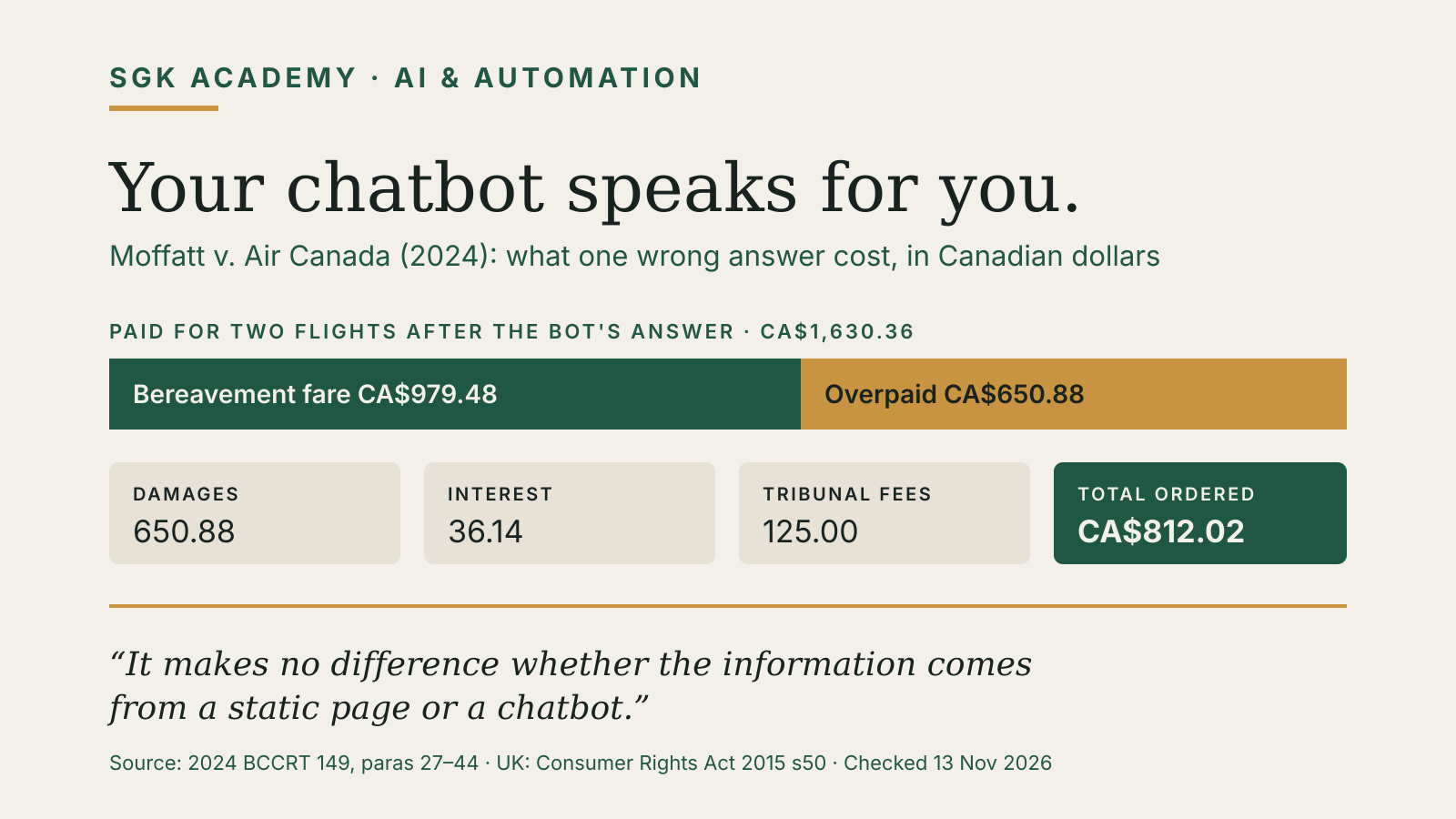
AI Chatbot Liability: When Your Business Is Bound by Its Bot
When a customer-facing chatbot gives a wrong answer: the Air Canada ruling, UK and EU rules, disclaimers and controls.
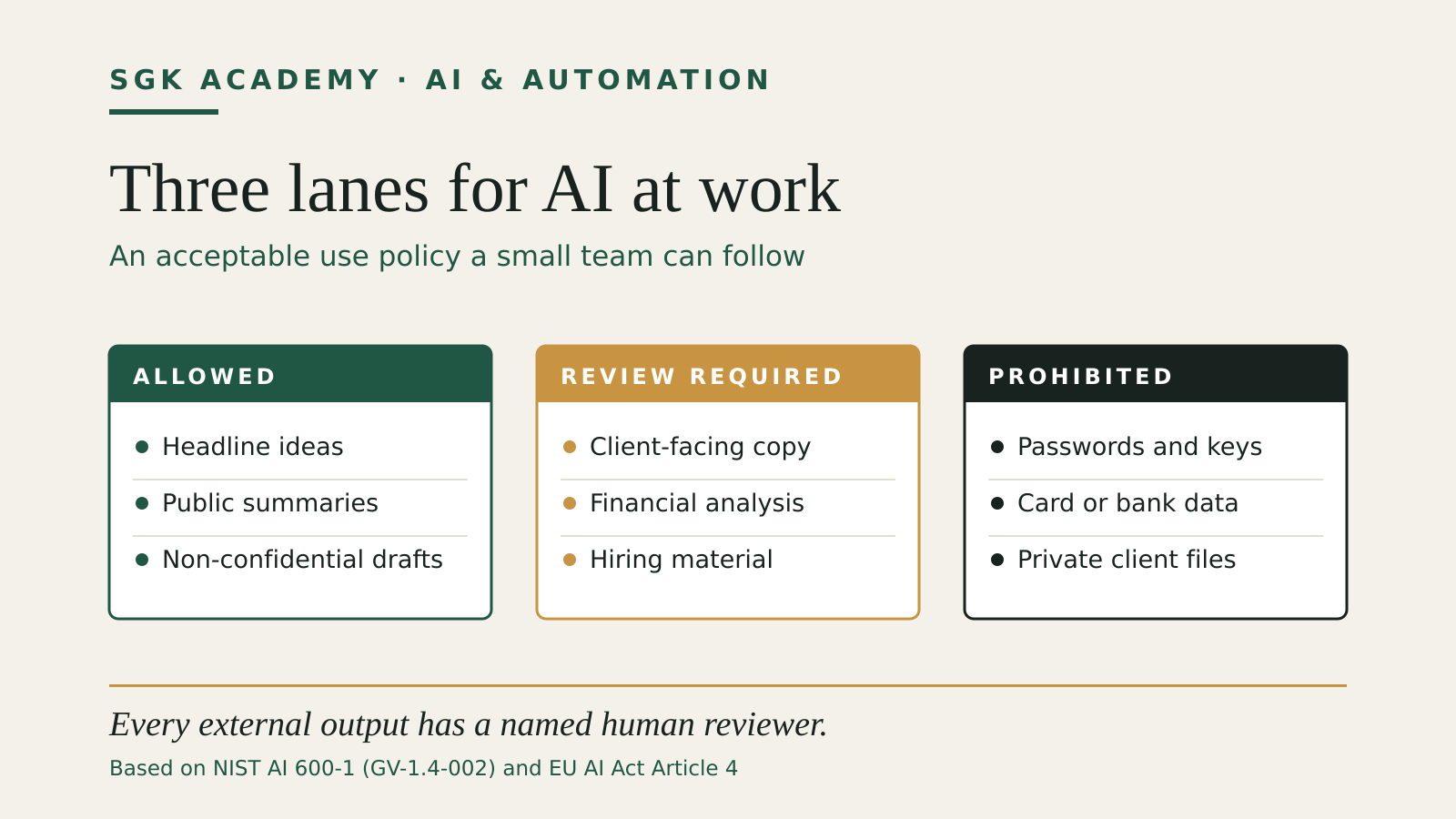
AI Acceptable Use Policy for a Small Business
A practical AI acceptable use policy: approved tasks, data limits, human review, AI literacy and incident handling.
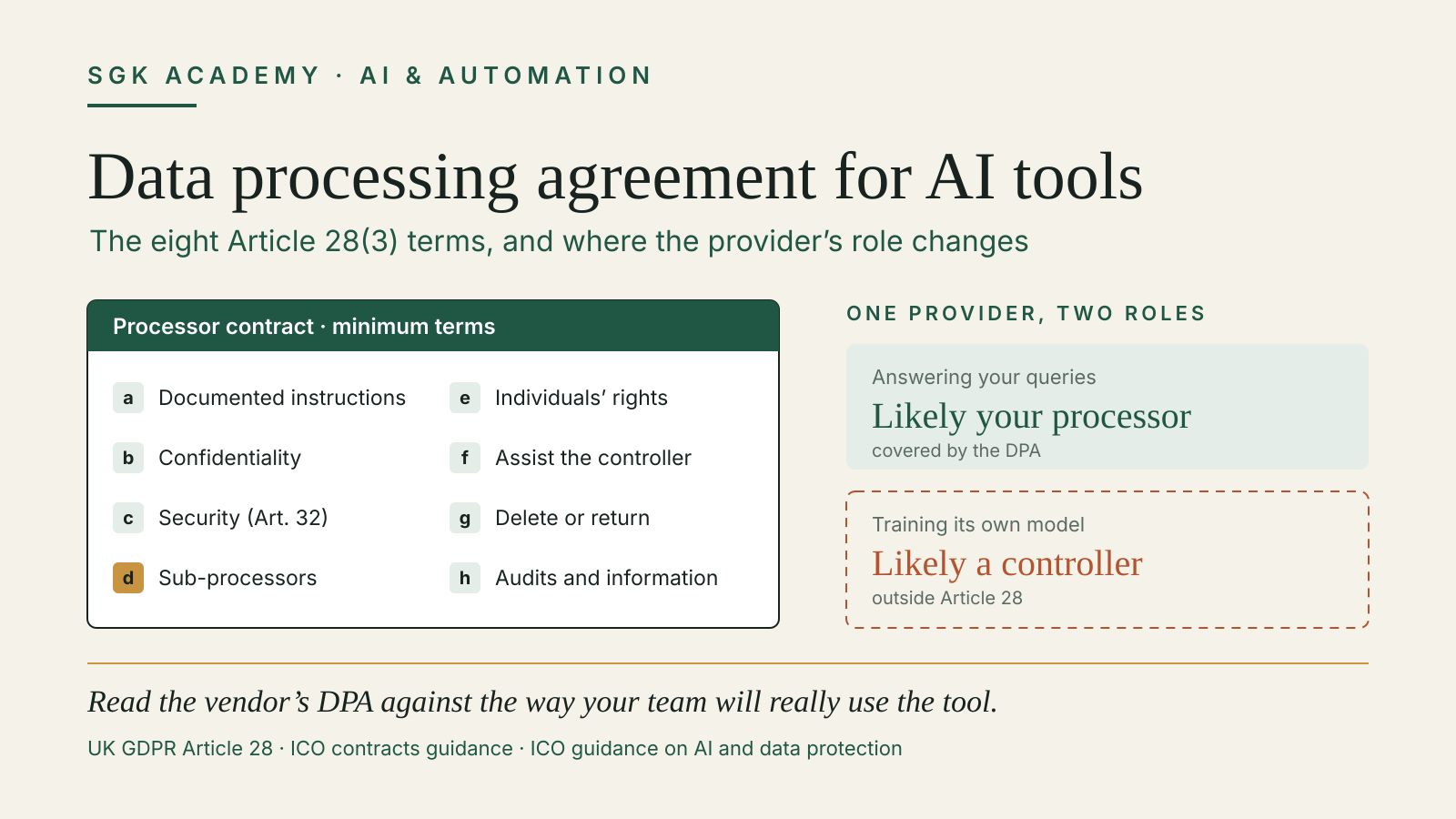
Data Processing Agreement for AI Tools: What Article 28 Requires
What UK GDPR Article 28 requires in a contract with an AI provider, and how to check its DPA before use.
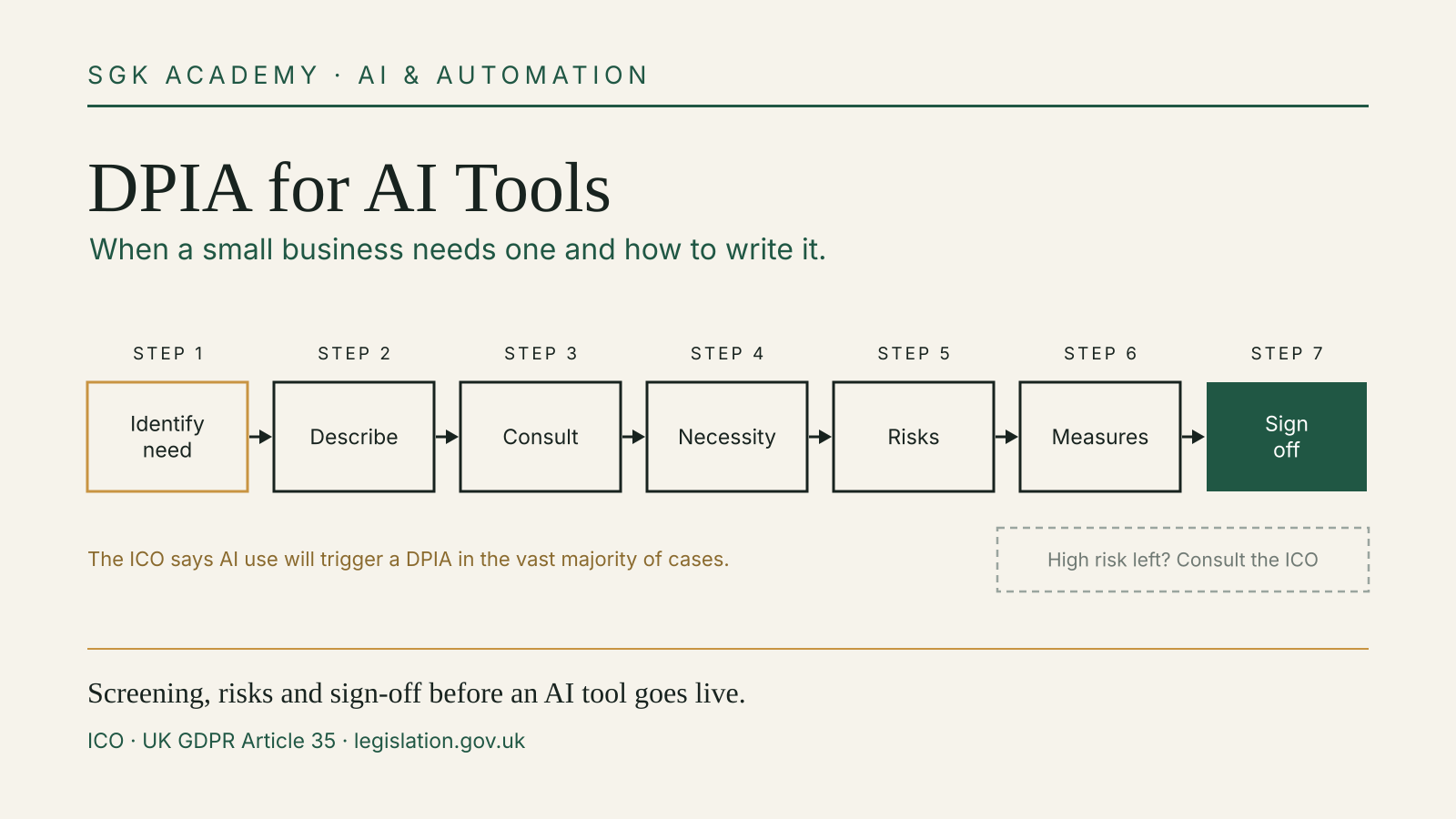
DPIA for AI Tools: When a Small Business Needs One and How to Write It
When UK GDPR requires a DPIA before your business uses an AI tool, and the ICO's seven steps to write one.
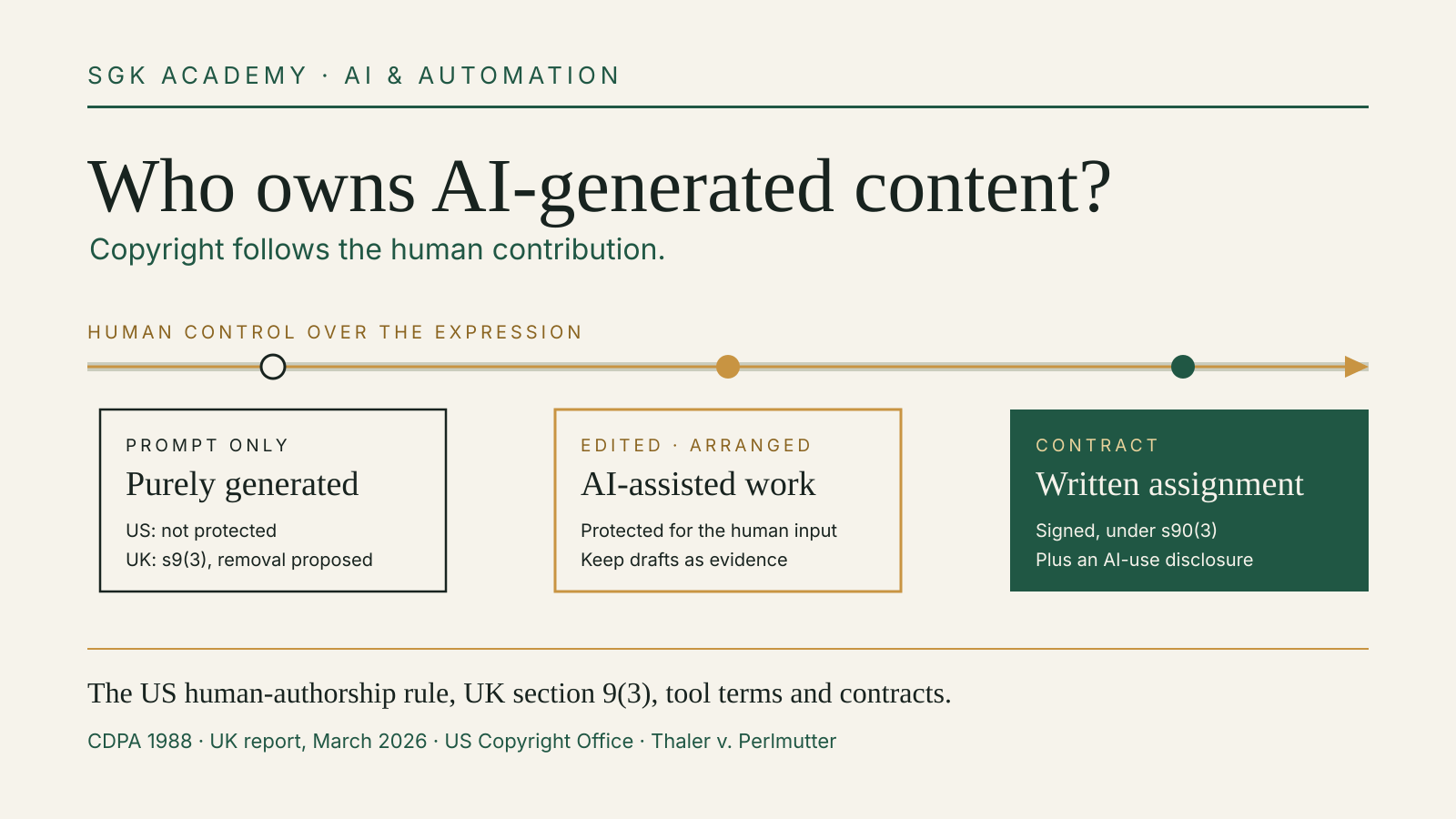
Who Owns AI-Generated Content? Copyright for Small Businesses
US and UK rules on who owns AI output, what tool terms assign and how to contract for AI-assisted work.
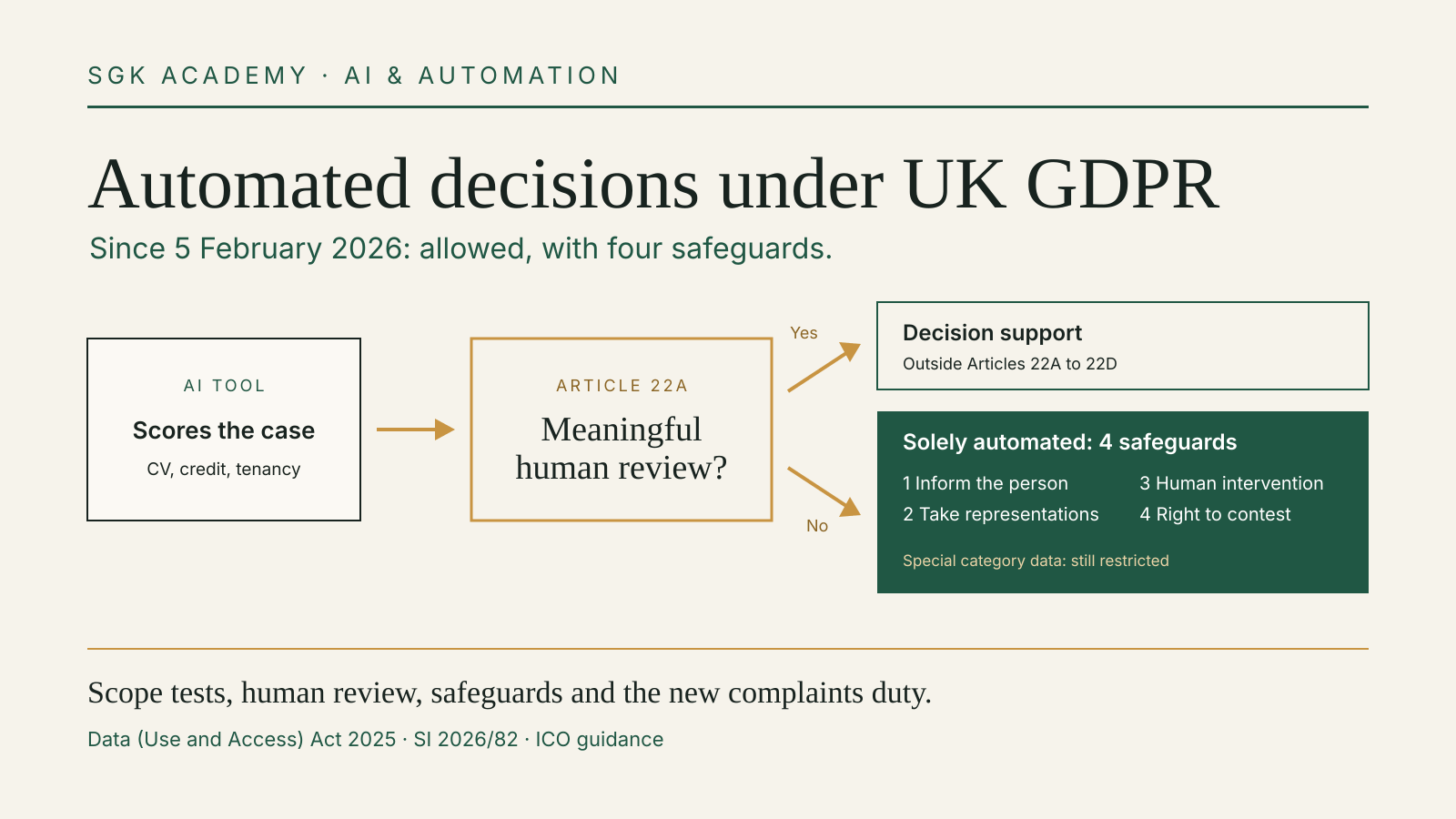
Automated Decision-Making Under UK GDPR: The 2026 Rules
When an AI tool decides about a person, what counts as human review and the four safeguards UK law now requires.
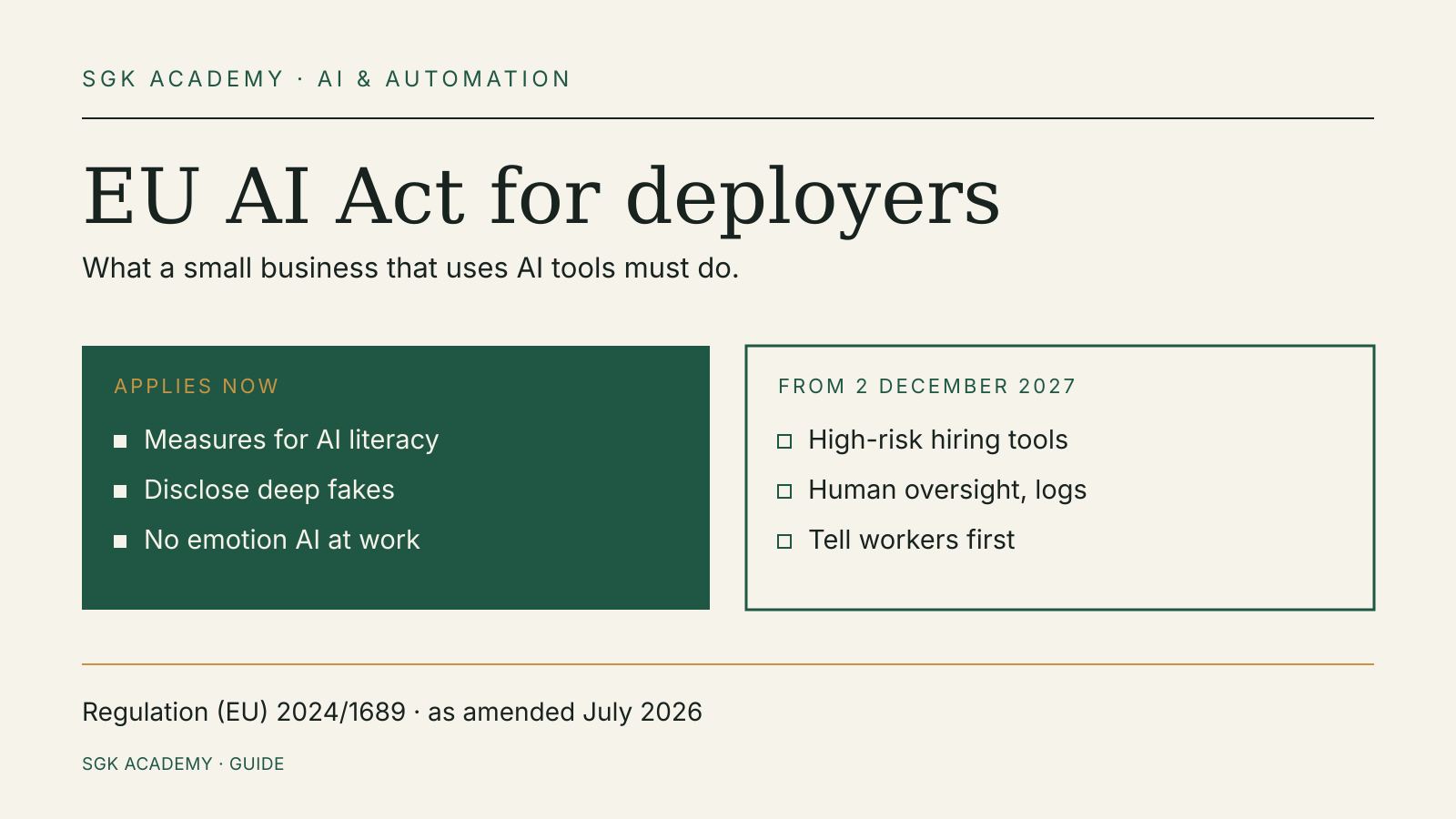
EU AI Act for Small Businesses: What Applies When You Use AI Tools
What the EU AI Act asks of a small business that uses AI tools, after the July 2026 changes.

Build an Invoice Review Workflow with AI
Use synthetic invoices to separate extraction, validation, review and payment approval.
How to Use AI for Financial Research
Build a source ledger, verify citations and recalculate figures before relying on an AI answer.
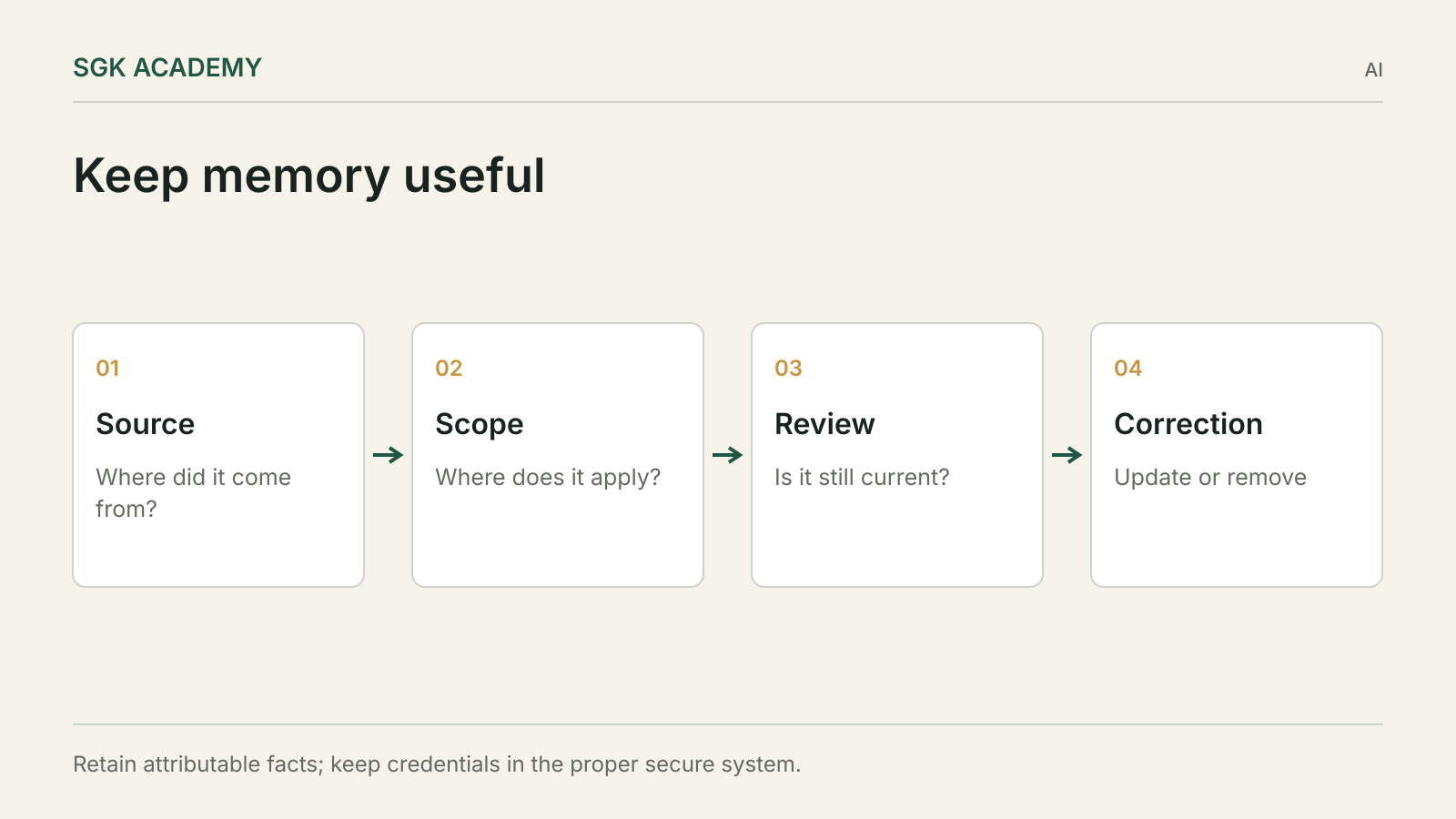
AI Memory: Decide What Your Assistant Should Keep
Keep useful facts, remove stale instructions and test what an assistant remembers.
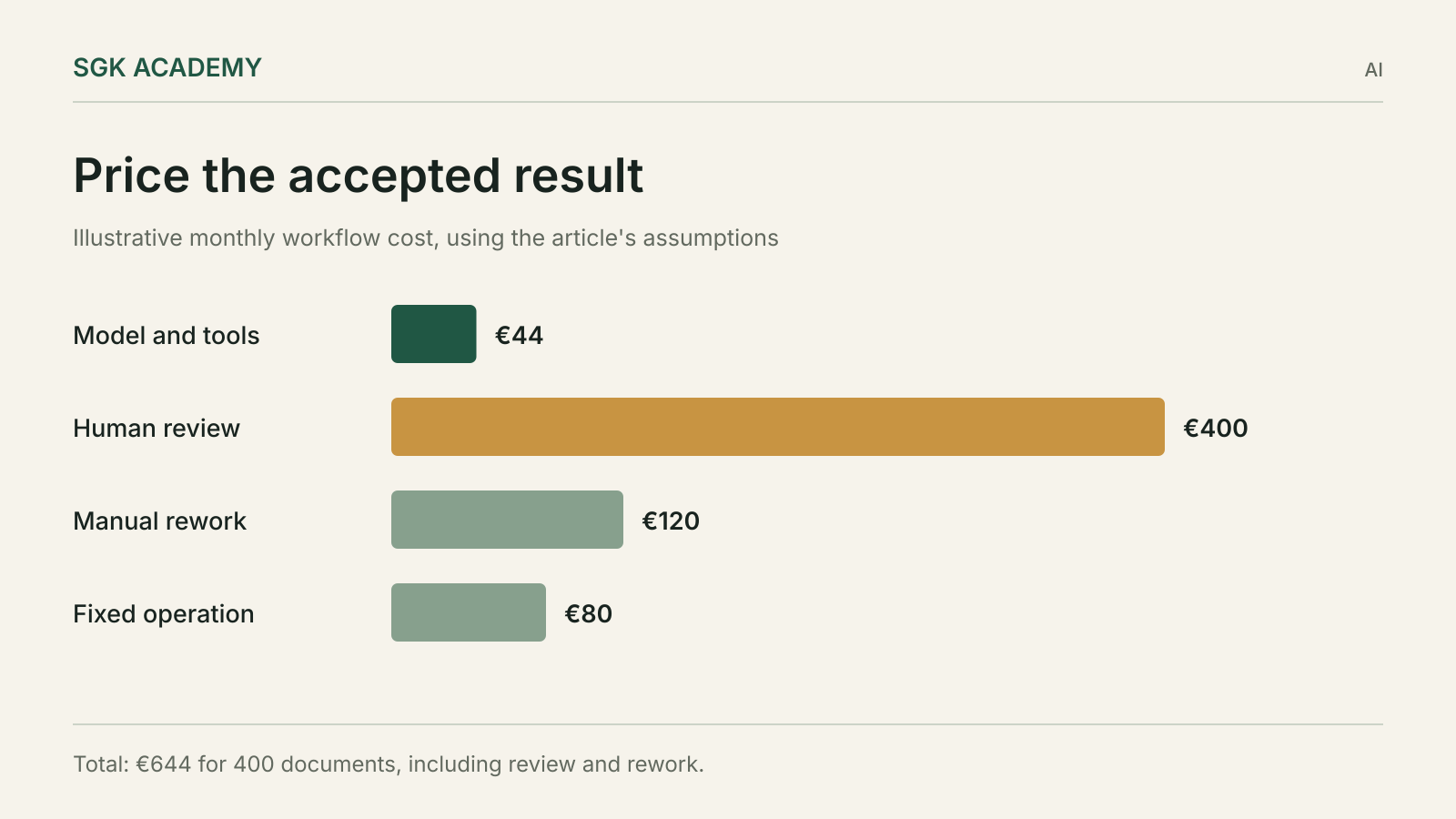
AI Workflow Costs: Price a Completed Task
Count review, retries and mistakes alongside model charges.
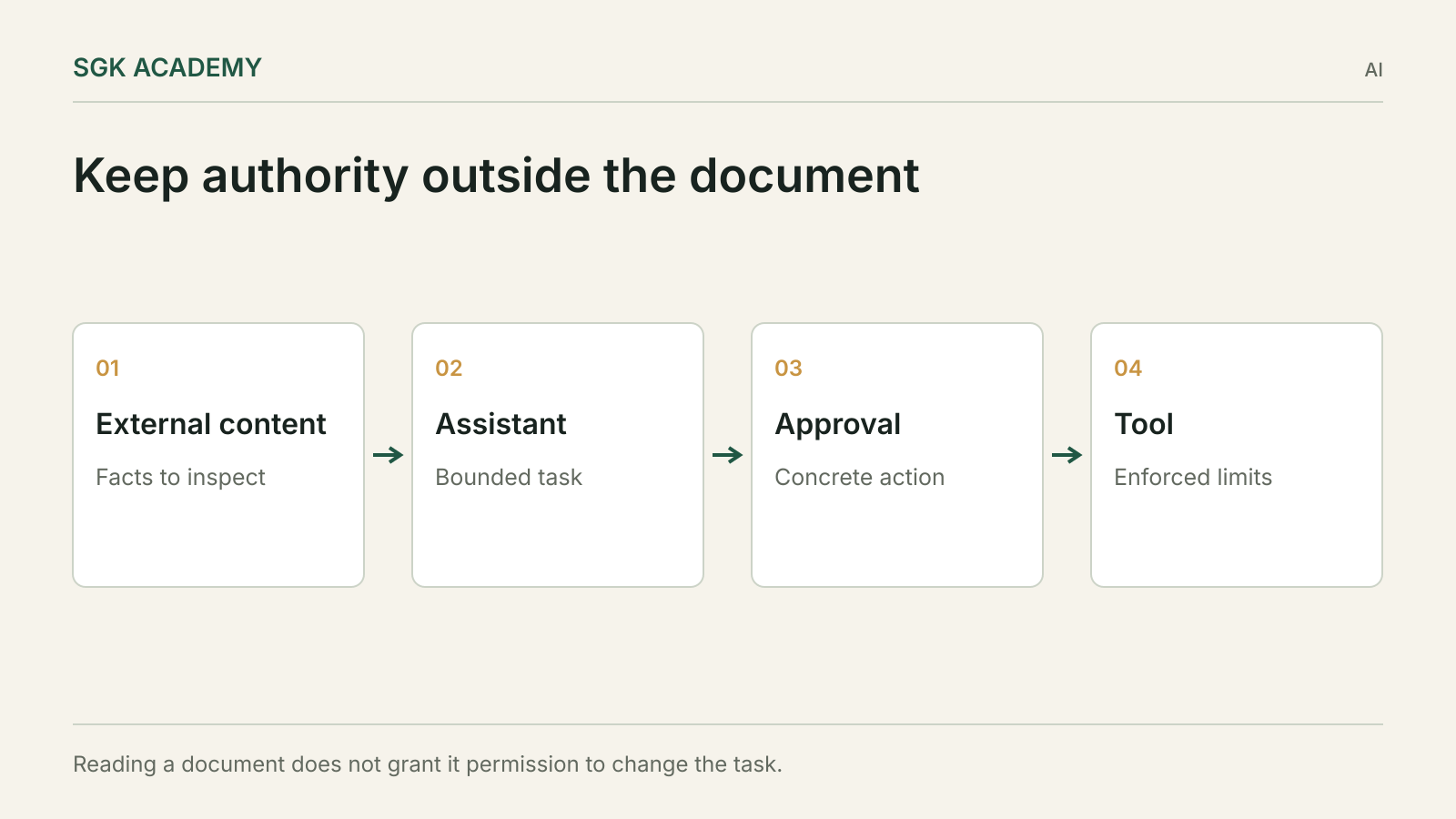
Prompt Injection: Keep Documents Out of Command
Stop instructions hidden in emails or documents from becoming unauthorised actions.
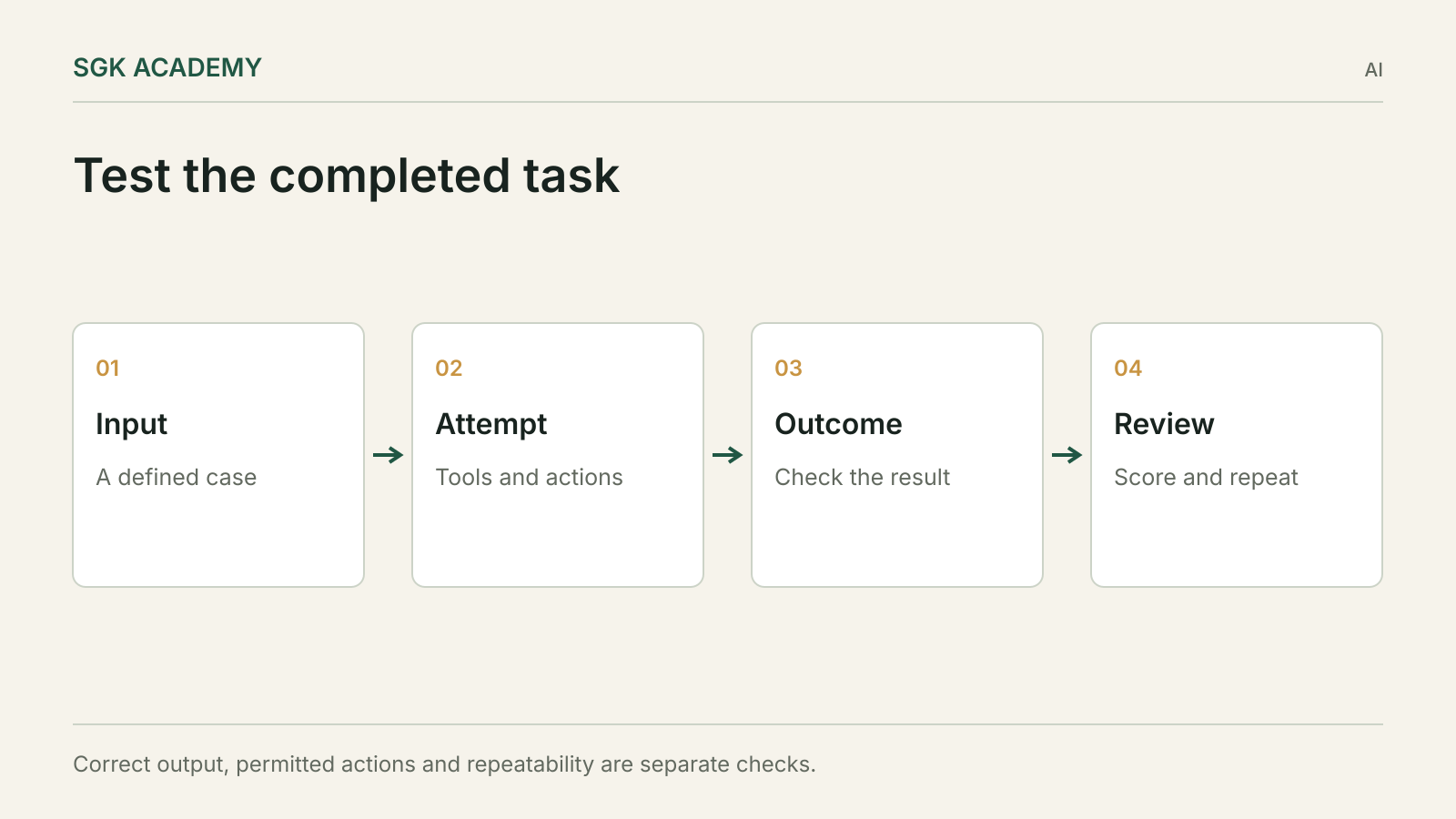
AI Agent Tests: Check the Work, Not the Demo
Build a small test set that checks completed tasks, permissions, errors and repeatability.
A fluent answer is not a verified source, and extracted invoice data is not payment approval. This desk explains how to give an AI system a bounded task, inspect its output and keep consequential actions in an appropriate review process.
The first guides work through financial research and invoice handling. They show how to maintain a claim ledger, check citations, recalculate figures and test a workflow with synthetic documents whose answers are known. Proposed tests are clearly distinguished from experiments actually run, and fictional data is kept separate from real business records.
Begin with AI for financial research, then explore invoice review with AI. Continue to software portability when choosing the tools that will hold the resulting records.