
Crypto & Web3
Understand custody, stablecoins, networks and the risks behind digital assets.

Accounting for Cryptocurrency: FRS 102, FRS 105 and IFRS
How a company records bitcoin and other tokens under FRS 105, FRS 102, IFRS and US GAAP, with a worked example.
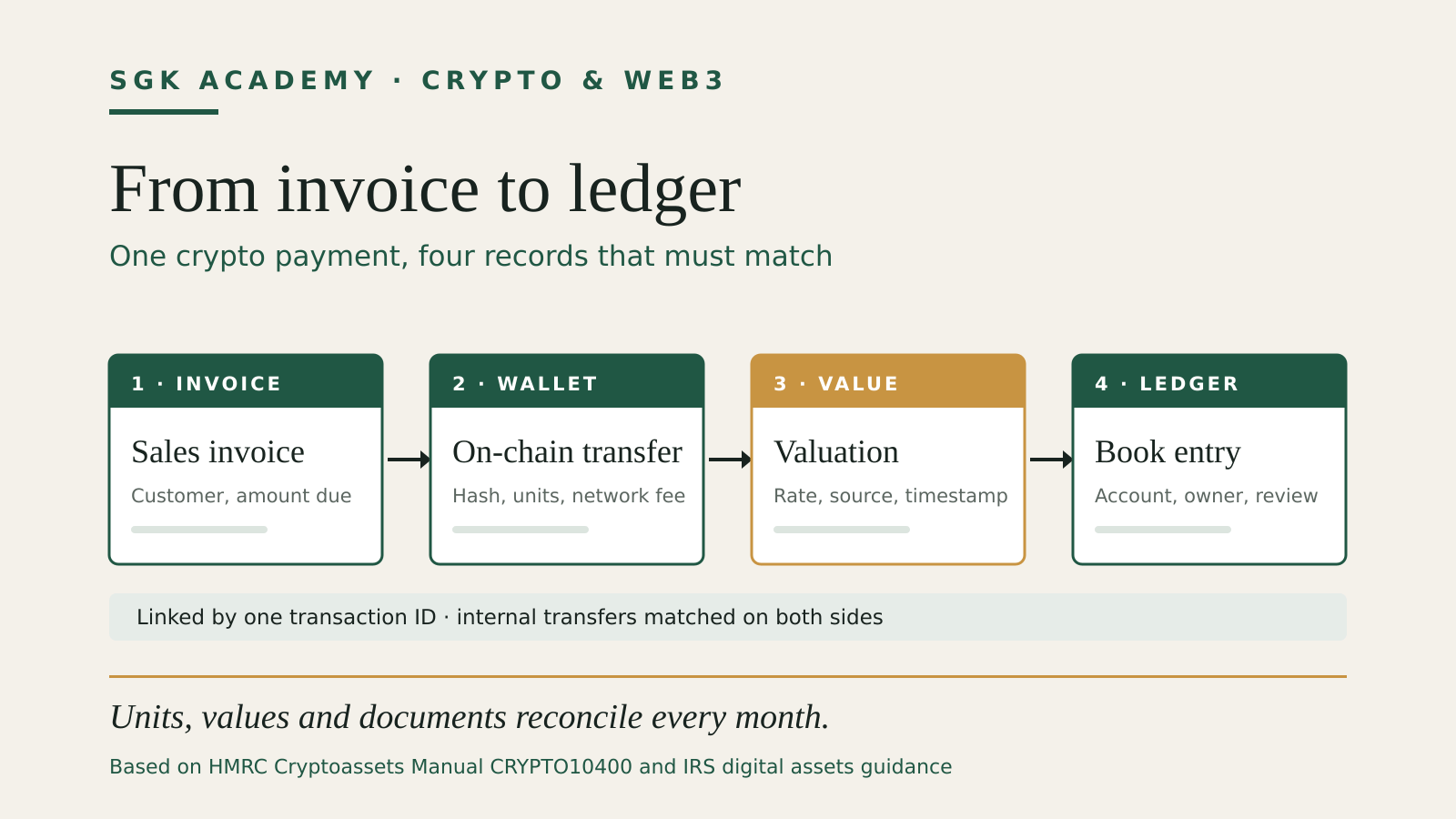
Crypto Transaction Records for a Small Business
Build an audit trail from invoice to wallet transfer, valuation and business ledger.
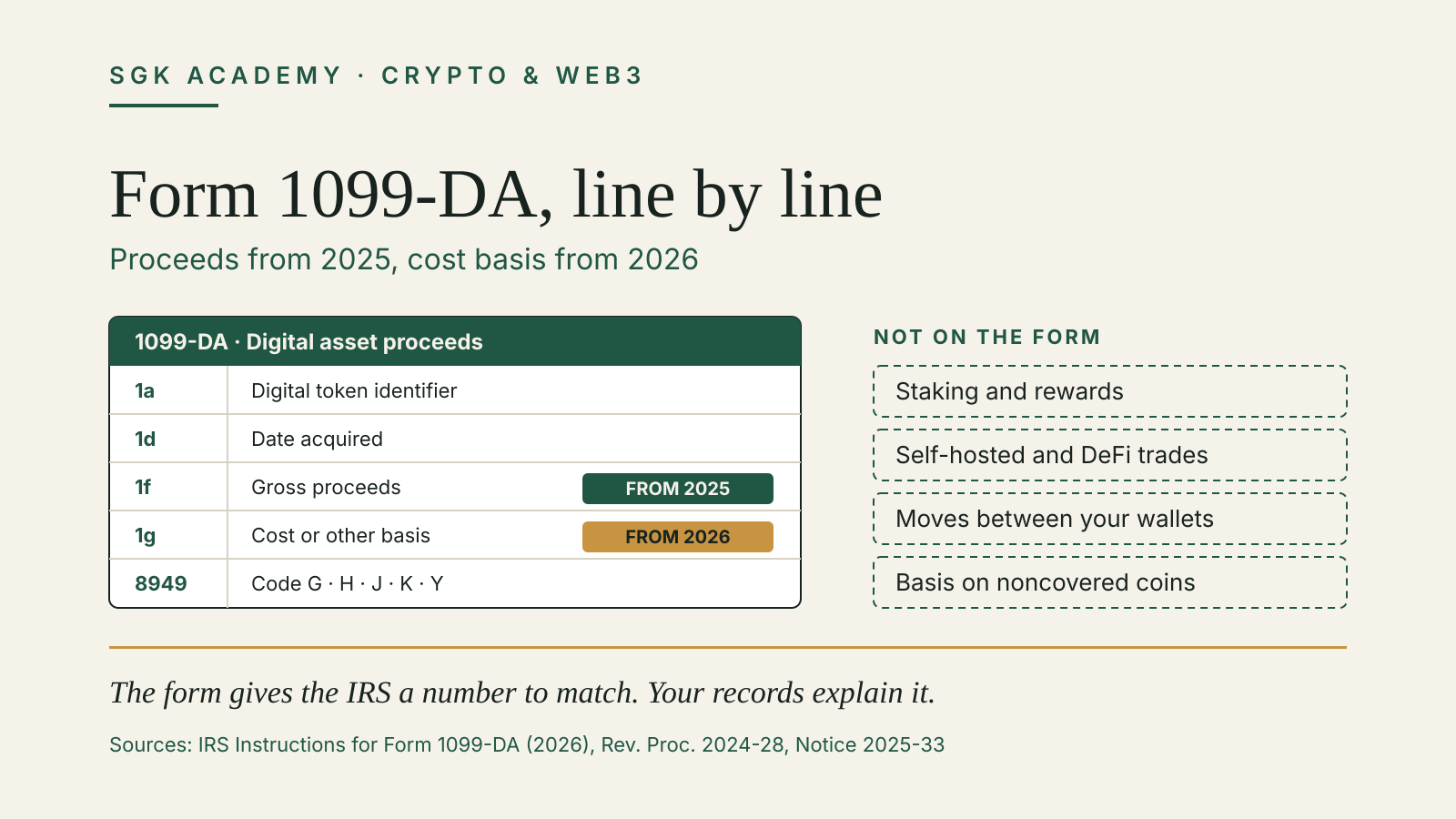
Form 1099-DA Explained for Crypto Sellers and Founders
What Form 1099-DA shows for crypto sales from 2025, when basis appears from 2026, and how to reconcile it.
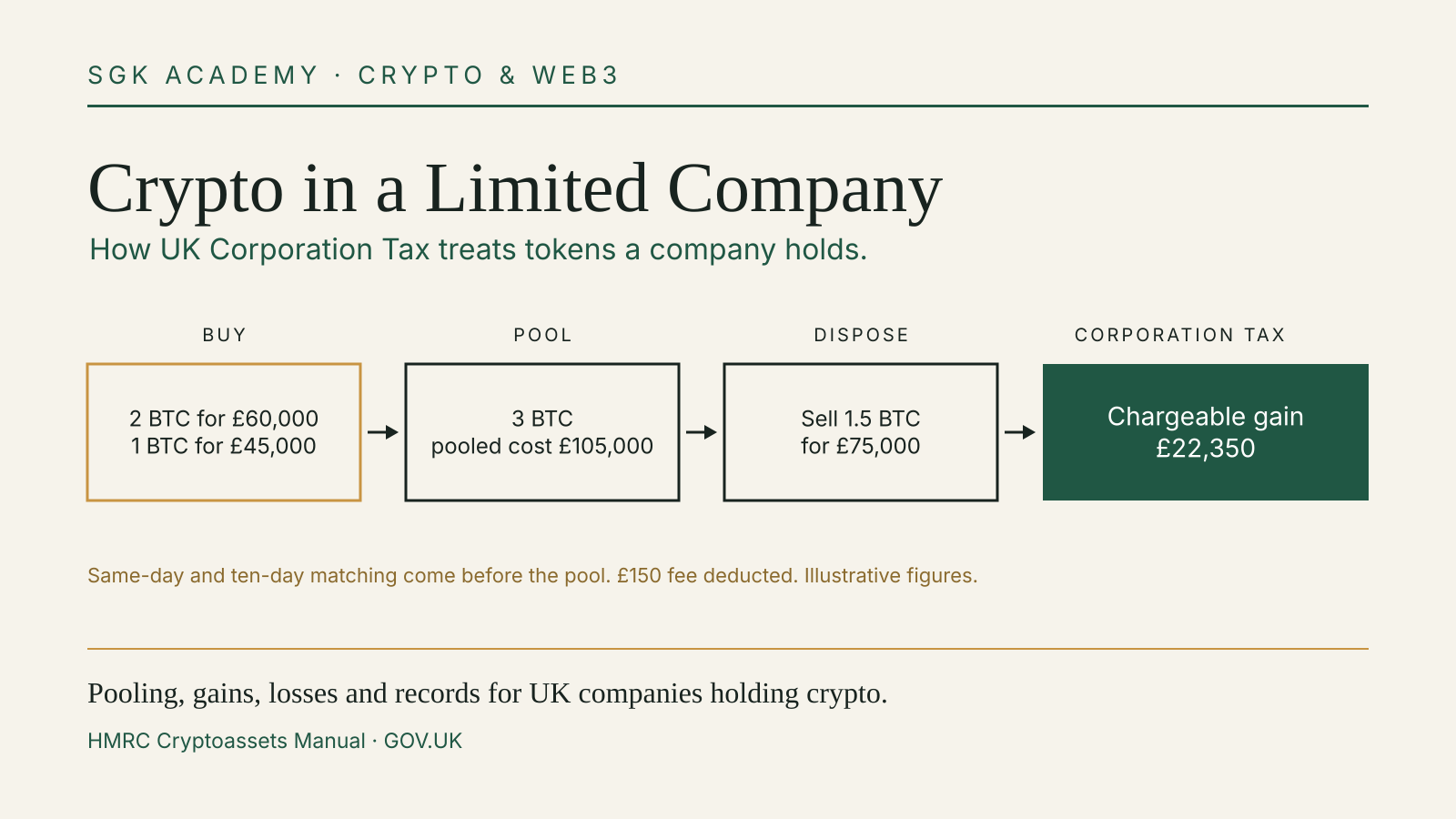
Crypto in a Limited Company: How UK Corporation Tax Treats Tokens
How HMRC taxes bitcoin and other tokens held by a UK limited company, from pooling to losses.
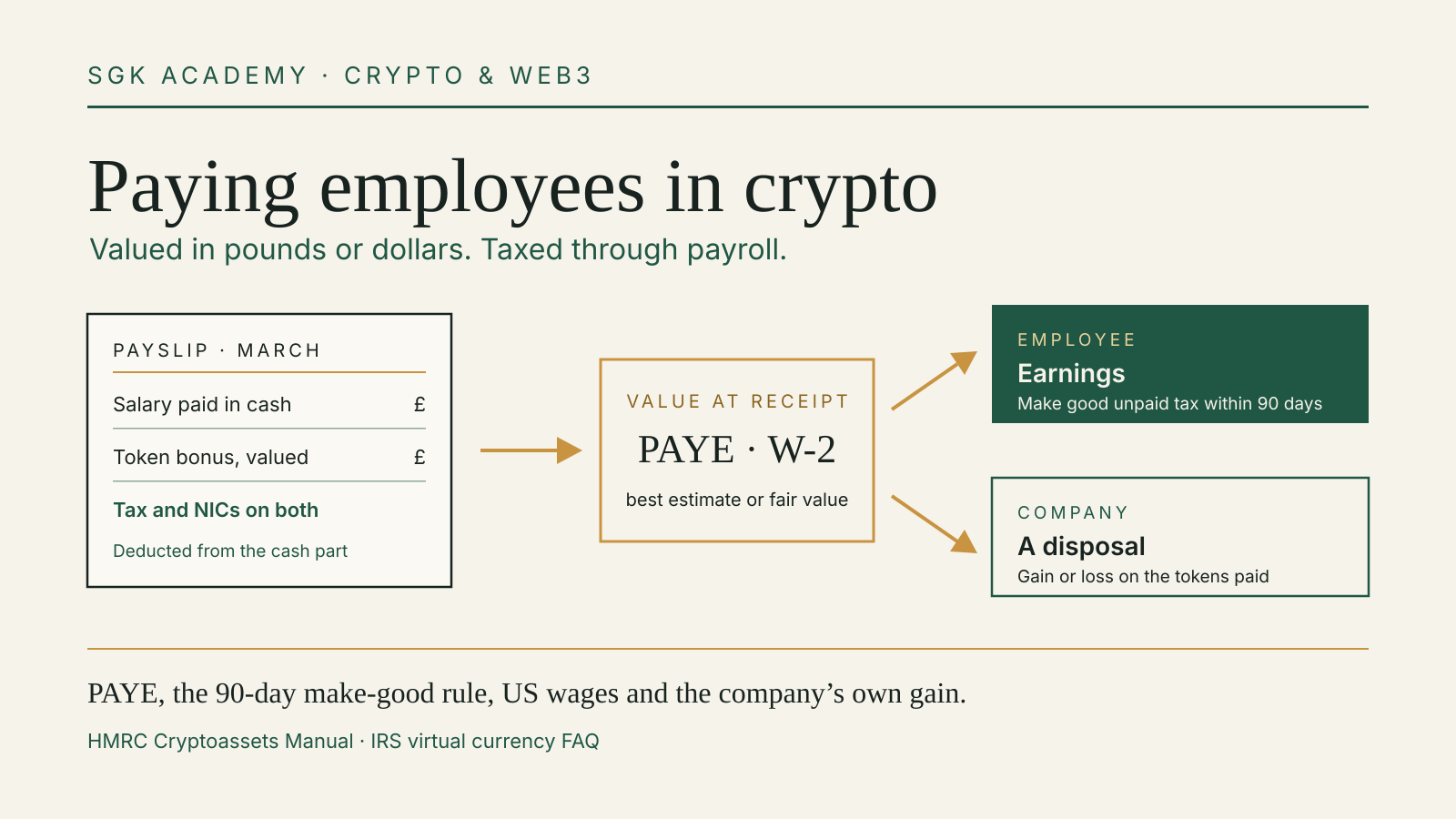
Paying Employees in Crypto: PAYE, Payroll Tax and Records
How PAYE, NICs, US withholding and the employer's own gain apply when staff are paid in tokens.
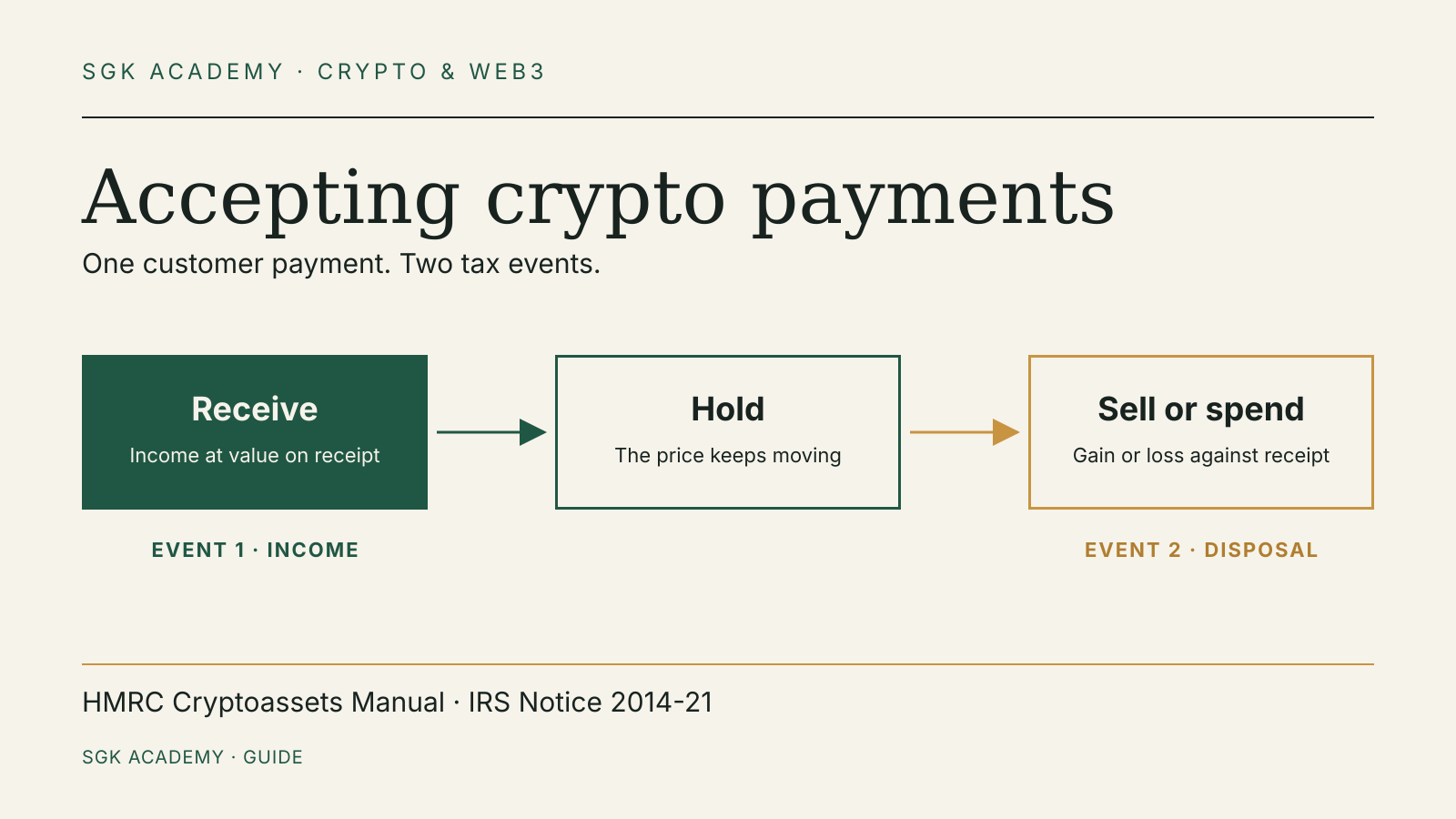
Accepting Crypto Payments as a Small Business: Tax, VAT and Records
How UK and US rules treat crypto a business receives as payment, the VAT position and the records to keep.
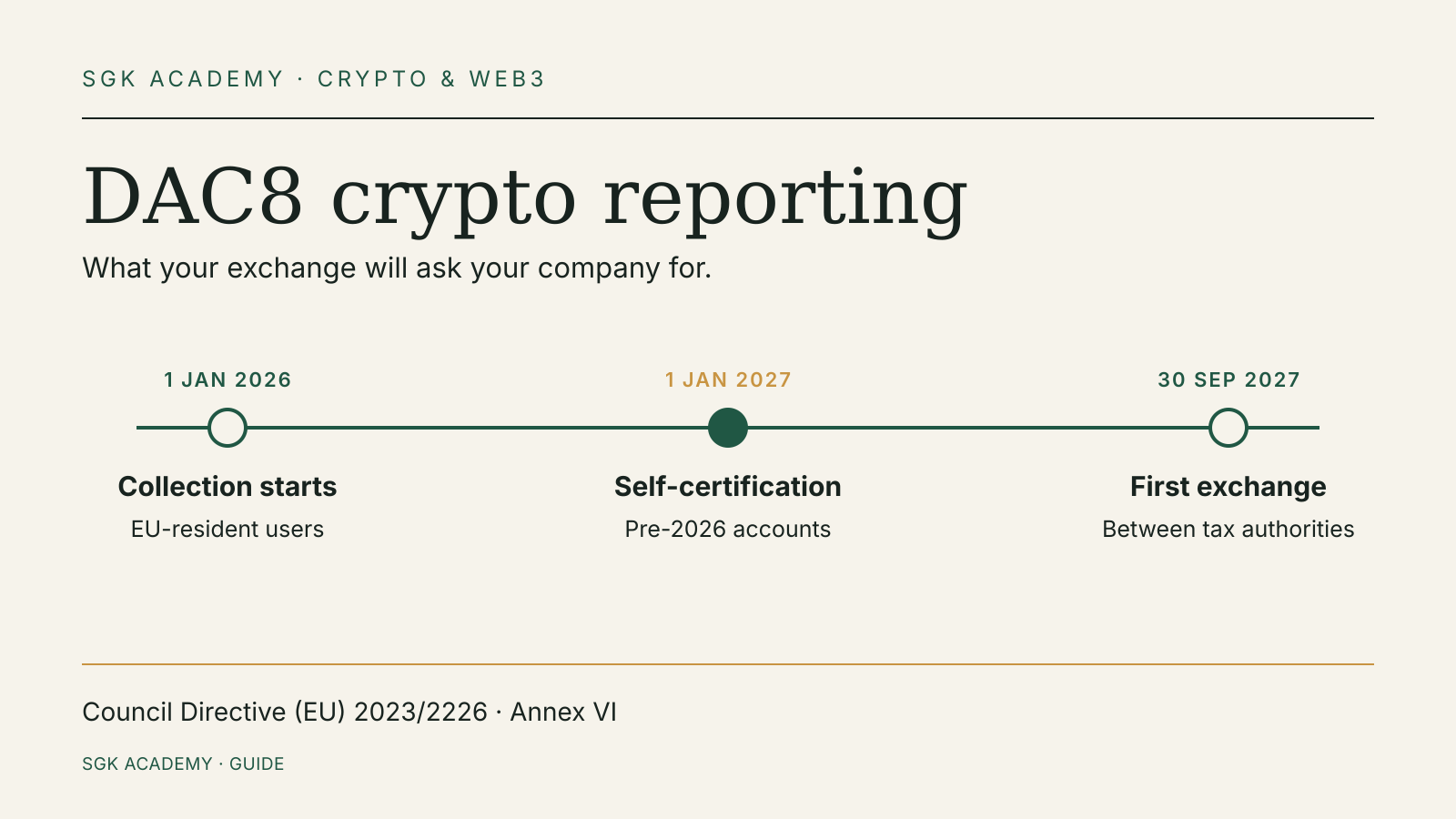
DAC8 Crypto Reporting: What Exchanges Will Ask Your Company For
What DAC8 means for a company with a crypto exchange account, and what to prepare before 2027.

USDT vs USDC: What You Actually Hold
Separate issuer backing, custody, networks and your route back to spendable money.

Before You Buy Crypto: Custody, Liquidity and Risk
Map custody, selling and withdrawal risks before putting money into crypto.
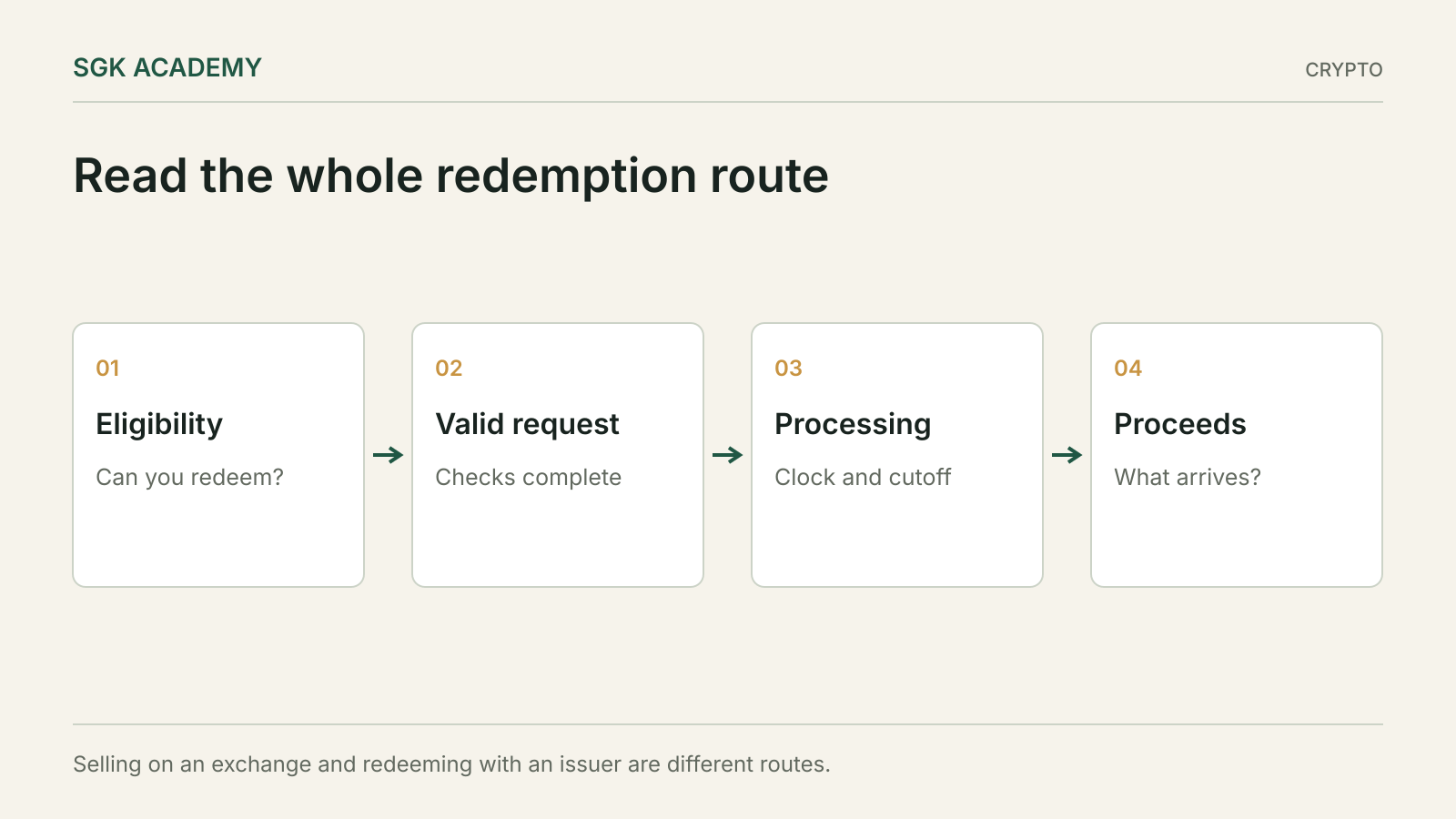
Stablecoin Redemption: Read the Exit Terms
A market price near one dollar does not explain how you can redeem the token.
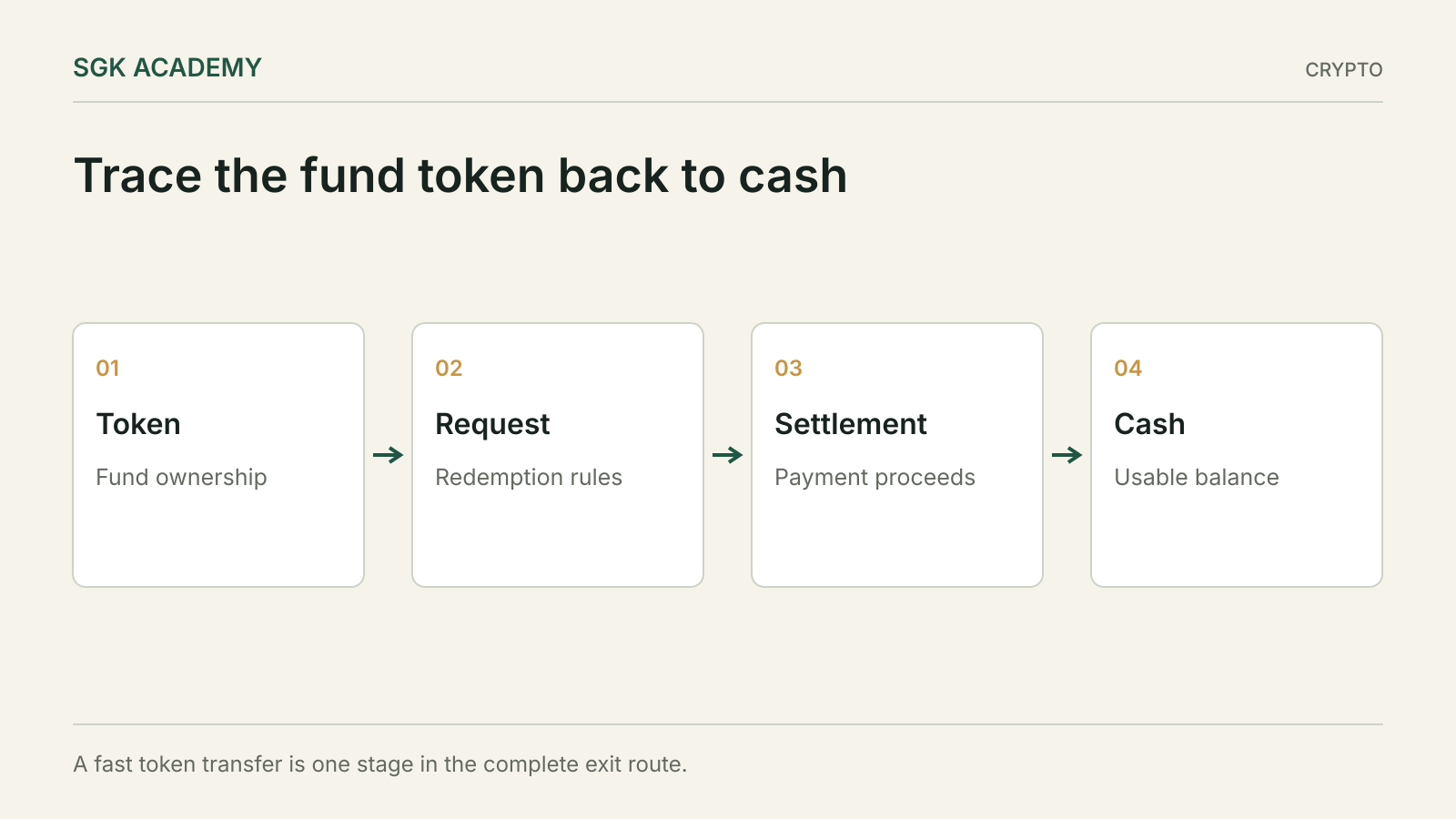
Tokenised Money Market Funds: Read the Claim
An on-chain fund share still depends on assets, dealing rules and redemption routes.
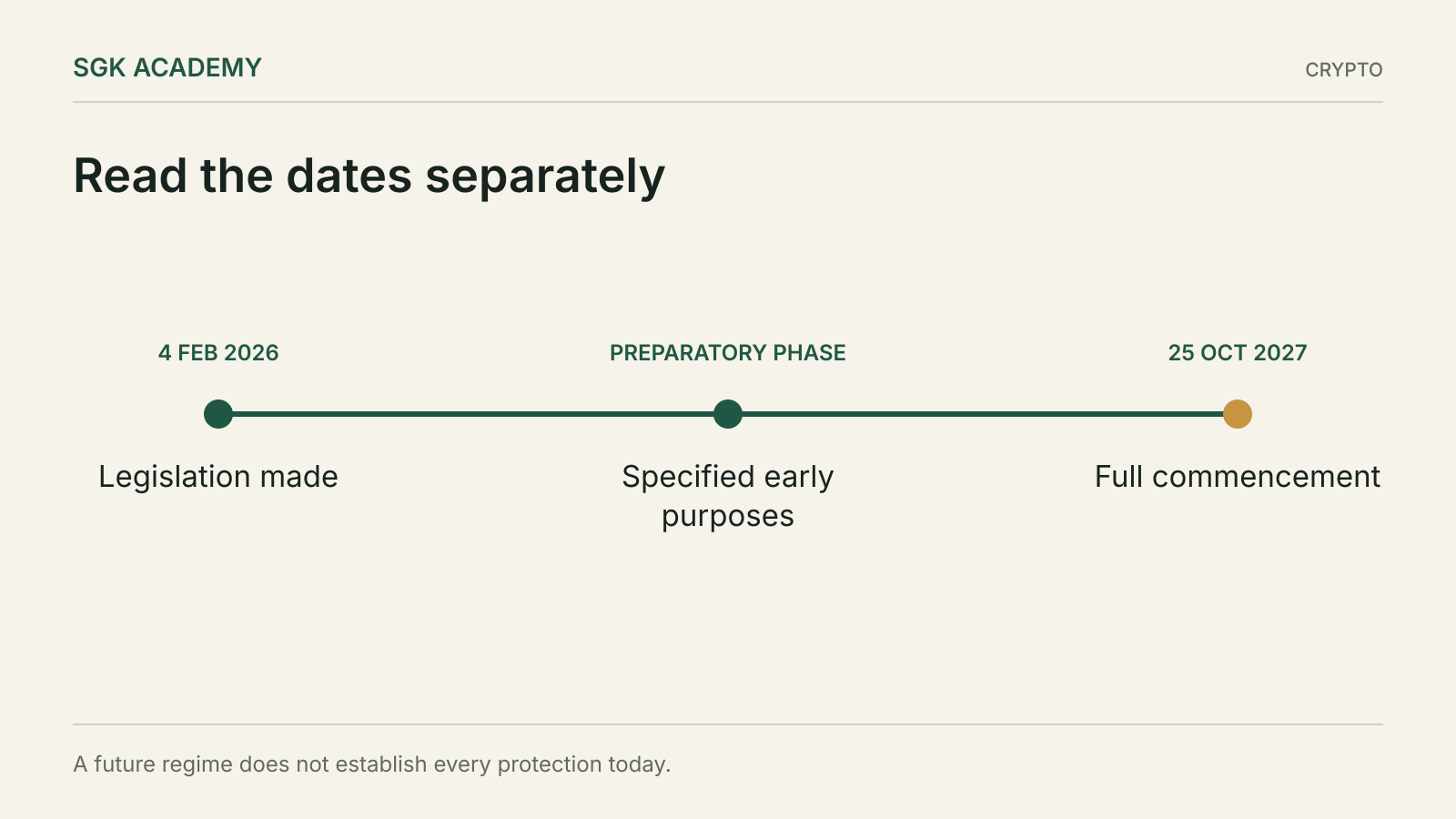
UK Crypto Regulation: What Changes, and When
UK crypto regulation dates to October 2027, and why the FCA's 28 February 2027 application deadline matters now.
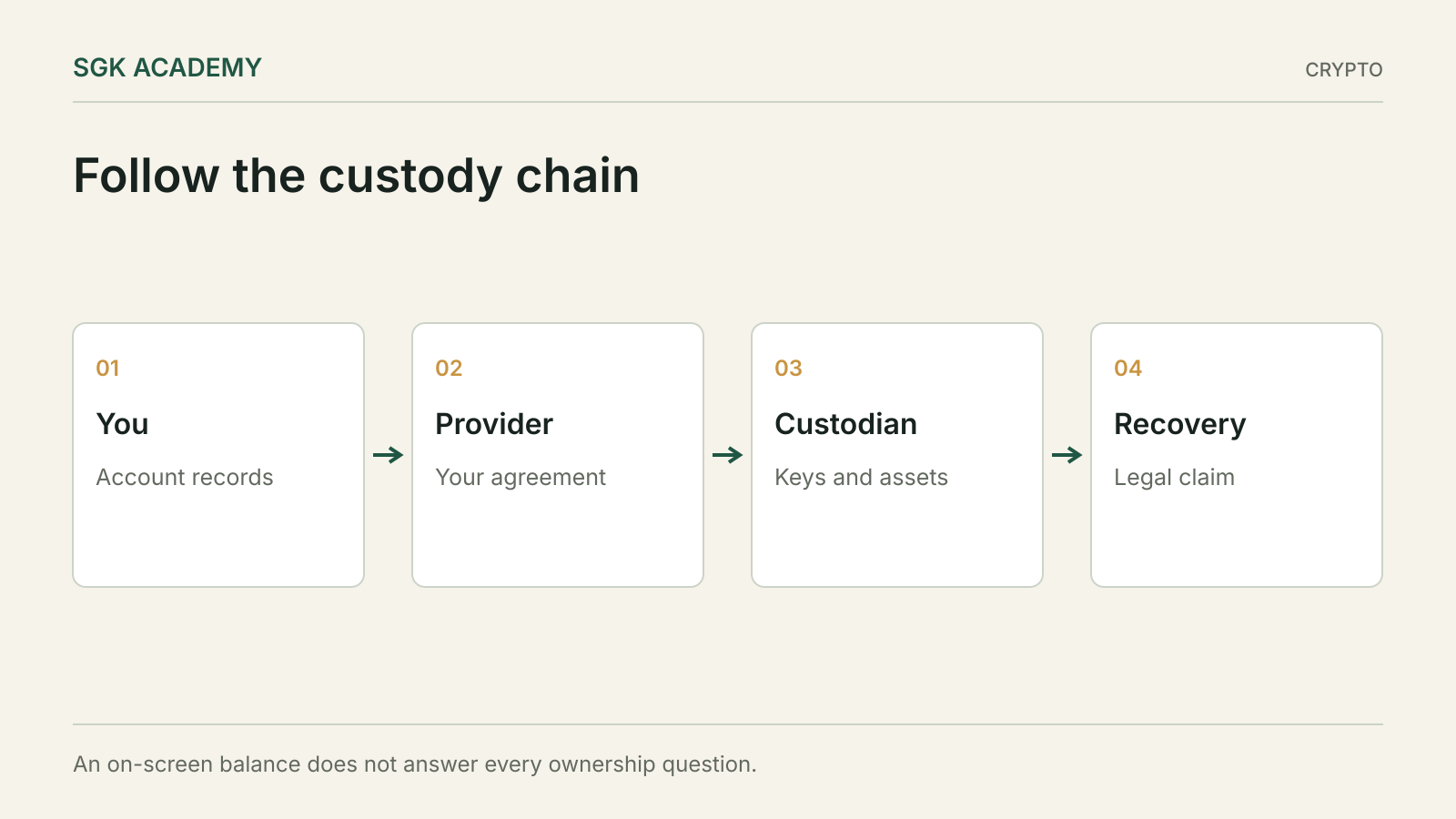
Crypto Custody: Who Owns the Assets in a Failure?
Read custody contracts, identify subcustodians and separate legal ownership from a wallet balance.
Begin with the route your money would take: buying an asset, holding it, selling it and withdrawing the proceeds. Each stage can depend on a different service, set of credentials or market. A price chart cannot explain those dependencies on its own.
Our crypto guides examine the distinction between controlling a wallet and relying on a custodian, between an issuer’s redemption terms and an exchange sale, and between a token’s target value and the amount you can actually receive. Worked examples use fictional figures so you can follow the calculation without mistaking it for a live quote.
Start with crypto custody and risk, then compare USDT and USDC. Use Start Here for a connected reading path.