Making Tax Digital for Income Tax is now part of the working year for some UK sole traders and landlords. It does not replace Self Assessment. It changes how business and property records reach HMRC before the annual return: compatible software keeps the records, sends quarterly summaries and submits the final tax return.
The rule started on 6 April 2026 for people whose qualifying income was above £50,000 in the 2024/25 tax year. The next groups join in April 2027 and April 2028. That makes the first practical question less “Do I use accounting software?” and more “Which earlier tax return puts me over which threshold?”
Source and version check: reviewed 18 October 2026 against HMRC guidance updated 16 October 2026. Rules, software recognition and exemptions can change; check the linked GOV.UK pages before acting.
The three start dates
HMRC looks at an earlier Self Assessment return and uses the qualifying income shown there to decide when the digital rules begin.
| Return HMRC checks | Qualifying income | MTD for Income Tax starts |
|---|---|---|
| 2024/25 | More than £50,000 | 6 April 2026 |
| 2025/26 | More than £30,000 | 6 April 2027 |
| 2026/27 | More than £20,000 | 6 April 2028 |
The threshold is a strict “more than” test. A qualifying income of exactly £30,000 is not above the £30,000 threshold. The start date also follows the tax year HMRC checks, not the day your turnover first crosses a number.
HMRC says it will review returns and write to people it expects to join. The letter is useful evidence, but it is not the test itself. You remain responsible for checking whether the rules apply if no letter arrives.
Partnerships are not in the timetable above. HMRC says they will be brought in later, with the timeline to be announced. A company director may have Self Assessment obligations, but company income is not automatically self-employment income. The relevant question is whether the individual has sole-trade or property income within the MTD rules.
What counts as qualifying income
Qualifying income is the gross income from self-employment and property before expenses. It is turnover, not profit.
Add together the amounts from every sole trade and property business that count. Salary, dividends, savings interest and most other personal income do not enter this threshold calculation, although they may still belong on the final tax return.
A simple example:
- design business turnover: £24,000;
- consulting turnover: £12,500;
- gross property income: £9,000;
- total qualifying income: £45,500.
That total is below £50,000 but above £30,000. Assuming the £45,500 appears in the 2025/26 return, the person joins from 6 April 2027.
Do not subtract software subscriptions, repairs, travel or other allowable expenses when testing the threshold. Those expenses matter to taxable profit, but the MTD entry test uses gross business and property income.
For jointly owned property, only your share counts. HMRC’s example takes a property generating £50,000 where two owners receive equal shares: each has £25,000 of qualifying property income, before adding any sole-trade turnover.
The rules also deal with short accounting periods. HMRC may annualise income where it has enough information. A new sole trader with six months of income can therefore be assessed by scaling that amount to a full year.
What you have to do differently
Four practical duties sit behind the label.
Keep digital records
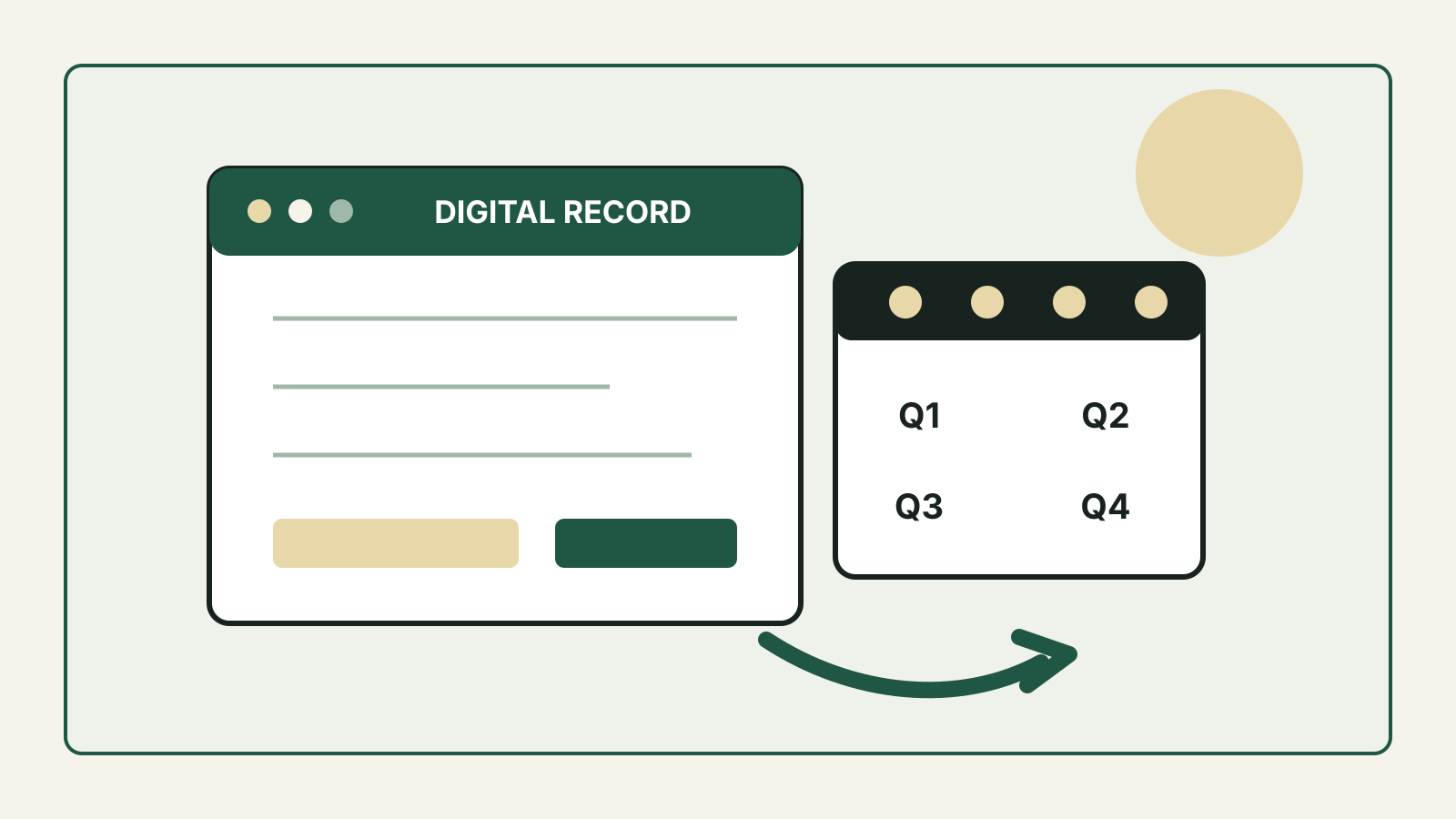
For each self-employment or property business, keep the amount, date and category of income and expenses in compatible software. A spreadsheet can remain part of the system, but HMRC says you need bridging or other compatible software to transfer the figures and make submissions.
Digital links matter. Re-keying totals from a spreadsheet into another product defeats much of the point of the record chain. Before choosing software, map the route from bank feed or invoice to ledger, quarterly update and final return.
Send quarterly updates
A quarterly update is a summary of income and expenses created from the digital records. It is not a mini tax return, and HMRC describes any tax figure shown after an update as a prediction.
Updates are required every three months for each sole-trade business and each property business. Someone with two trades and one property business therefore has more than one reporting stream. Choose software that can keep those sources separate while still producing one annual return.
Complete the annual position
You still submit a tax return and pay tax by 31 January after the end of the tax year. Before submission, check the full-year business figures, make accounting and tax adjustments, and add other income and gains.
If cash timing is the problem, our guide to payments on account explains why the January bill can include both a balancing payment and an advance payment for the next year. MTD’s quarterly summaries do not change those payment dates by themselves.
Use recognised software
HMRC does not provide the bookkeeping product. Its software finder lists products that have passed the recognition process, but recognition does not mean every product supports every situation.
Check whether the product can handle:
- all of your trades and property businesses;
- your accounting method;
- VAT as well as Income Tax, if relevant;
- agents and client approval;
- spreadsheets or existing bookkeeping data;
- adjustments and the final tax return;
- exports you can keep if you later switch provider.
A recognised submission module may still be a poor fit for daily bookkeeping. Test the full record path, not only the “MTD ready” badge.
Cash basis and accrual accounting still matter
MTD changes the record and submission process. It does not make cash and accrual accounting interchangeable.
Cash basis records income when money is received and expenses when paid. Accrual accounting records income and costs when earned or incurred, subject to the applicable rules. The method affects the timing of profit, while qualifying income for the MTD threshold starts from gross income reported in the relevant return.
Our cash versus accrual accounting guide separates the bookkeeping method from tax eligibility. Make that choice before configuring categories and opening balances in new software. Changing method during migration without a clear cut-off can duplicate invoices or leave unpaid bills outside the records.
A preparation plan for April 2027
People above £30,000 on their 2025/26 return are the next mandatory group. A useful preparation sequence is:
- Confirm the threshold. Add gross self-employment and property income from the submitted 2025/26 return. Do not use profit.
- List each income source. Separate every sole trade and property business. HMRC expects quarterly updates for each.
- Choose the record system. Decide whether an all-in-one product or spreadsheet plus bridging software fits the work.
- Set a migration date. Reconcile the bank, open invoices, bills and property records at one clear date.
- Authorise the software. Signing up for MTD and authorising software are separate practical steps.
- Run a rehearsal. Produce a quarter from real records and check the totals before the first deadline.
- Keep an export. Save transaction-level data and submission receipts in a format you can read without the original subscription.
If an agent handles the return, agree who owns daily record quality, who reviews each update and who presses submit. “The accountant does it” is not a workflow unless the hand-off dates and source documents are defined.
What happens if income falls
Once you are in MTD, one lower-income year does not automatically take you out. HMRC says you may opt out after qualifying income stays below the relevant threshold for three consecutive tax years.
That is different from ceasing every relevant income source. If all self-employment and property income has ended before the new tax year, tell HMRC. Otherwise, it may sign you up using the return information already held.
If one source ends but another continues, income from the ceased source can still be included in the threshold calculation based on the earlier return. This catches a common assumption: selling a rental property after filing does not necessarily erase that property income from the test for the coming year.
Exemptions and difficult cases
Digital exclusion can support an exemption, but it is not automatic. HMRC points people to a separate exemption process. An exemption from MTD does not remove the duty to report income and gains through Self Assessment.
Other cases deserve an explicit check before signup: non-UK residence or domicile, insolvency, trust or estate income, jointly owned property with net statements, and a return amended around the start of a tax year. HMRC’s qualifying-income guidance explains how amendments before and after the start date can produce different results.
Where the rule depends on a change of circumstances, keep the evidence: the submitted return, amendment receipt, cessation date and HMRC correspondence. Software cannot resolve a classification question that was never documented.
Penalties in the first year
HMRC says it will not apply penalty points for late quarterly updates during 2026/27 to people who were required to start on 6 April 2026. That is a first-year easement for those quarterly updates, not a general penalty holiday.
Late tax returns and late tax payments can still carry penalties. Voluntary users should also read the separate penalty guidance before signing up, because volunteering can bring them into the digital regime earlier.
The decision checklist
Before relying on a software notification or an HMRC letter, answer these questions from the return and source records:
- Are you an individual registered for Self Assessment?
- Do you have sole-trade or property income?
- What is the gross total before expenses?
- Which tax year’s return contains that total?
- Which start threshold follows from that return?
- Are all income sources still active?
- Does your software handle each business and the final return?
- Have you checked whether an exemption applies?
If the answers point to a mandatory start, sign up and authorise compatible software before building the first quarterly submission. If they do not, keep the calculation: the threshold will fall again for later cohorts.